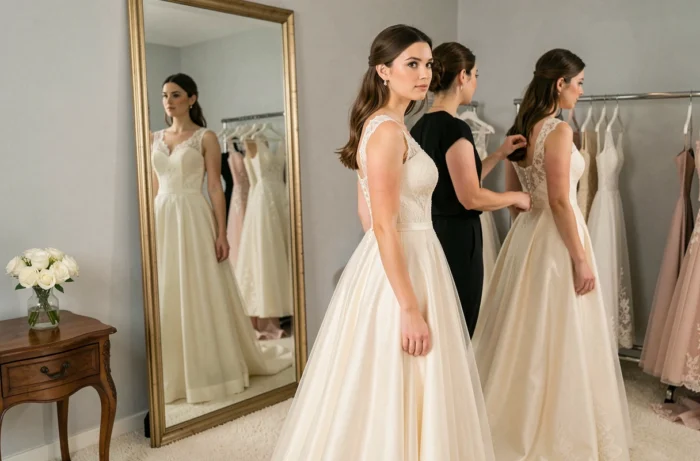
The Nantes wedding dress market combines multi-brand boutiques, independent designers, and specialized consignment shops. This diversity of offerings makes the shopping experience less linear than it seems: the time between the first fitting and the wedding day, the exact scope of a custom service, or the actual cost of a second-hand dress vary depending on the chosen route. Understanding these variables before entering a boutique allows for approaching each fitting with concrete criteria.
What the price of a wedding dress in Nantes covers
Most brides-to-be compare the prices displayed in the window or on a website. This reflex overlooks part of the actual budget. A dress purchased in-store rarely includes alterations in the base price, and these adjustments can represent a significant expense.
For a second-hand dress, the apparent price difference with a new one decreases once professional cleaning and alterations are added. Requesting a quote for alterations before signing remains the most reliable way to assess the total cost. This precaution also applies to any new dress that requires significant adjustments to the bodice or train.
A detailed overview of the shopping journey, from the first visit to the final fittings, is available by consulting wedding dresses in Nantes on Nuptialement, which helps anticipate each expense item.
Custom-made dresses deserve the same vigilance. The term encompasses very different realities: some designers create an original pattern with a test garment and several fitting appointments, while others start from an existing model that they adapt to your measurements. The quoted price does not always describe the included steps. Before committing, clarify whether the service includes the creation of the pattern, the number of intermediate fittings, and the finishing touches.
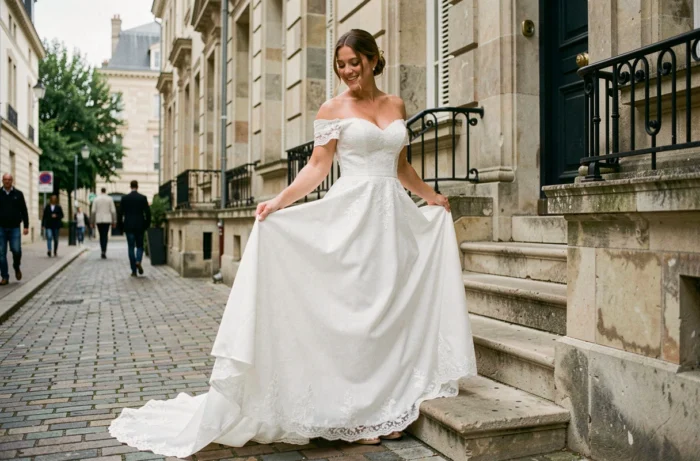
Fitting timeline and realistic schedule in Nantes
Nantes boutiques generally advise starting fittings several months before the wedding. This timeframe covers ordering the model from the manufacturer, receiving it, and making alterations. In practice, the useful window depends on the purchasing route.
- In multi-brand boutiques, ordering a model from a brand involves a manufacturing time that varies according to the collection and the time of year. The months from January to March see high demand, which can extend lead times.
- In custom creation, the schedule depends on the number of fittings planned and the complexity of the model. A dress with embroidery or lace requires more time than a simple cut in crepe.
- In second-hand or consignment, the dress is available immediately, but alterations on a second-hand dress take as much time as on a new one. Planning for this timeframe avoids unpleasant surprises.
A first fitting well in advance also allows you to test silhouettes without the pressure of purchase. Returning a few weeks later with a refined perspective often changes the perception of cuts and materials.
Alterations and adjustments: the often underestimated technical appointment
The fitting in-store shows a dress in a standard size. The gap between this size and your body shape is corrected during alterations, a precision job that determines the final drape. Two points deserve particular attention.
The bodice concentrates the majority of adjustments. A bodice that is too loose cannot simply be fixed by tightening the side seams: depending on the construction (boned, lined, with or without underwire), the tailor may need to redo the entire structure. Ensure that the person doing the alterations is skilled in this type of work, especially on models with delicate embellishments.
The hem is adjusted with the shoes for the big day. Trying them on during the last fitting appointment ensures the correct length. A heel of a different height, even by a centimeter, changes the line of the dress and how the train rests on the ground.
For a second-hand dress, the condition of the seams and embellishments determines the feasibility of alterations. Damaged embroidery or fabric weakened by time limits adjustment possibilities. Checking the actual condition of the dress before purchase remains the most cost-effective precaution.
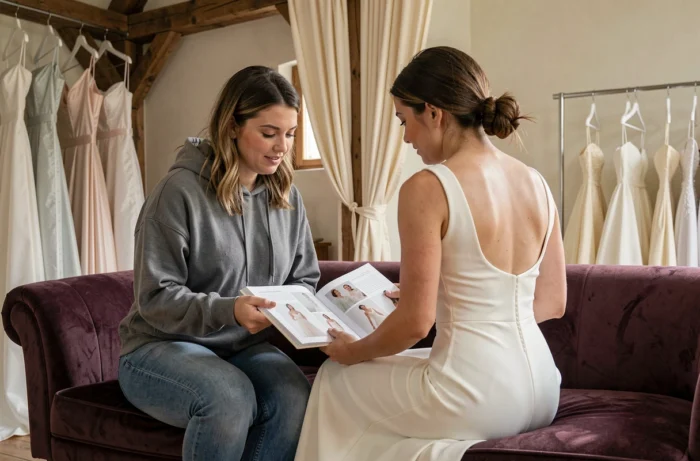
Accompanying persons and fitting conditions in Nantes boutiques
Most boutiques in Nantes limit the number of accompanying persons per appointment. This logistical constraint (modest fitting rooms, timed slots) has a useful side effect: it reduces the cacophony of conflicting opinions.
Two companions are sufficient in the vast majority of cases. Choosing people who can provide precise feedback on comfort and drape, rather than a general aesthetic judgment, better guides the decision. A friend who notices that the bodice gapes under the arms offers more valuable input than a comment on the lace color.
Taking photos under the same lighting for each model tried on makes comparison easier afterward. Visual memories can quickly distort, especially after three or four fittings in different boutiques.
Accessories and coherence of the complete outfit
The veil, shoes, jewelry, and hairstyle interact with the dress. An elaborate neckline does not pair well with an imposing necklace. A cathedral train complicates wearing back-strap shoes if you plan to dance.
Rather than buying each element separately after choosing the dress, bring your potential accessories during the second fitting. This approach allows for validating the overall coherence before the final alterations, not after.
Accessories change the perceived silhouette as much as the cut of the dress. A thin belt accentuates the waist on a straight cut. A short veil exposes the shoulders and alters the visual balance of a bateau neckline. Testing these combinations in the fitting room, and not just in front of a mirror at home, avoids discrepancies on the wedding day.
The choice of a wedding dress in Nantes benefits from being treated as both a technical and emotional project. Comparing total costs, setting a realistic schedule according to the purchasing route, and allowing time for careful alterations are the three levers that separate a pleasant fitting from a regretted decision.