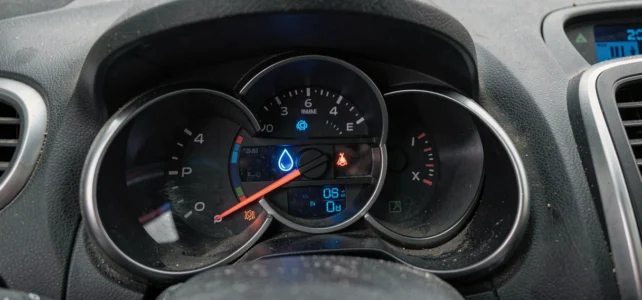
The water droplet (or basin) warning light on Clio 3 indicates a low brake fluid level in the reservoir. This warning is directly connected to the float sensor integrated into the hydraulic fluid reservoir, located on the master cylinder. Its red illumination requires immediate diagnosis of the braking circuit, not the cooling circuit as is sometimes read on forums.
Hydraulic level sensor on Clio 3: operation and false contacts
The brake fluid reservoir of the Clio 3 incorporates a magnetic float sensor. When the level drops below the minimum threshold, the float opens the electrical circuit and the control unit lights up the warning on the dashboard.
We regularly observe cases where the warning light comes on intermittently. The cause is rarely an active leak. A corroded connector on the reservoir, a float stuck due to deposits of old fluid, or a false contact in the wiring is enough to trigger the alert.
Before looking for a leak, we recommend disconnecting the sensor connector, cleaning the pins with an electrical contact cleaner, and then reconnecting. If the warning light disappears and the level in the reservoir is visually correct, the problem was with the sensor itself. This check takes less than five minutes and avoids an unnecessary workshop visit. To delve deeper into the meaning of the water droplet warning light on Clio 3, diagnosing the sensor remains the first logical step.
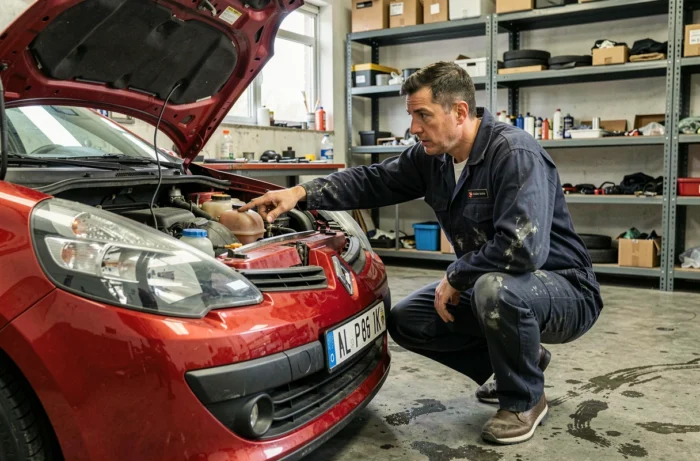
Brake pad wear and decrease in fluid level
A gradual decrease in brake fluid without visible leaks points to advanced wear of the pads. The mechanism is purely mechanical: as the linings wear down, the pistons of the calipers move forward in their housing to compensate. The volume of fluid retained in the calipers increases, and the level in the reservoir drops.
This phenomenon is the most common cause of the water droplet warning light coming on in Clio 3. Topping up the fluid without replacing the pads solves nothing. The level will drop again as wear progresses.
How to confirm that the pads are the issue
- Visually check the thickness of the linings through the caliper window, with the wheel removed. If the remaining thickness is less than a few millimeters, replacement is necessary.
- Check for the absence of wet spots or drips around the hoses, fittings, and calipers. No traces mean no leaks, so it’s purely mechanical wear.
- Observe the fluid level in the reservoir: if it is just below the “MIN” mark without being at the bottom, the correlation with pad wear is almost certain.
Once the new pads are installed and the pistons pushed back, the fluid level naturally rises in the reservoir. The warning light goes out at the next start without any additional manipulation.
Leak in the hydraulic braking circuit: locate the weak point
When the level is very low or the reservoir is nearly empty, an active leak in the braking circuit is likely. On the Clio 3, recurring leak points are well identified.
The front brake hoses are the first to fail. Exposed to splashes and steering stresses, they crack after several years. The leak manifests as visible seepage on the hose or a puddle on the ground, near the front wheel.
The metal fittings on the rigid pipes, especially at the rear wheel arch passages, are also vulnerable to corrosion. A pipe perforated by rust causes a rapid loss of pressure and abnormal pedal depression.
What to do in case of a confirmed leak
The current guideline in case of a red warning light related to braking is not to brake suddenly. We recommend gently steering to a safe place, lightly testing the pedal to assess the remaining resistance, and then turning off the engine once stopped. If the pedal sinks without resistance, the vehicle should not be driven and must be towed.
Water droplet warning light Clio 3: frequent confusion with coolant
The brake warning light icon on Clio 3 resembles a droplet falling into a basin. This shape is often confused with a coolant or engine temperature warning light.
The engine temperature warning light is distinct: it represents a thermometer submerged in a liquid, not an isolated droplet. The droplet/basin warning light concerns exclusively the braking circuit, never the cooling circuit.
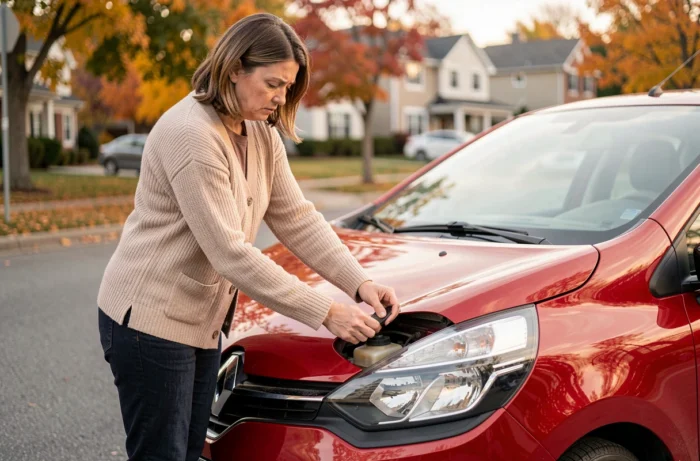
This confusion leads some drivers to check the coolant expansion tank, or even to top up with water, while the problem lies under the hood near the master cylinder. Correctly identifying the icon avoids wasting time and especially the risk of driving with a faulty braking system.
Brake fluid on Clio 3: what preventive maintenance
Brake fluid is hygroscopic: it absorbs ambient moisture over time. Fluid laden with water sees its boiling point drop, increasing the risk of vapor lock (loss of braking efficiency due to fluid vaporization under high heat). Regular purging of the circuit is the only remedy.
- Replace the brake fluid according to manufacturer recommendations, generally every two years or with each pad replacement.
- Use fluid that complies with the DOT 4 standard, which is standard for the Clio 3.
- Purge all four corners of the vehicle starting with the wheel farthest from the master cylinder (generally the rear right).
- Check the condition of the reservoir and cap: a cracked cap accelerates moisture absorption.
A properly maintained braking circuit does not trigger unnecessary warning lights. The majority of activations of the water droplet warning light on Clio 3 result from deferred maintenance, whether it’s worn pads or fluid that has never been purged. Keeping these two elements up to date eliminates the problem at its source.