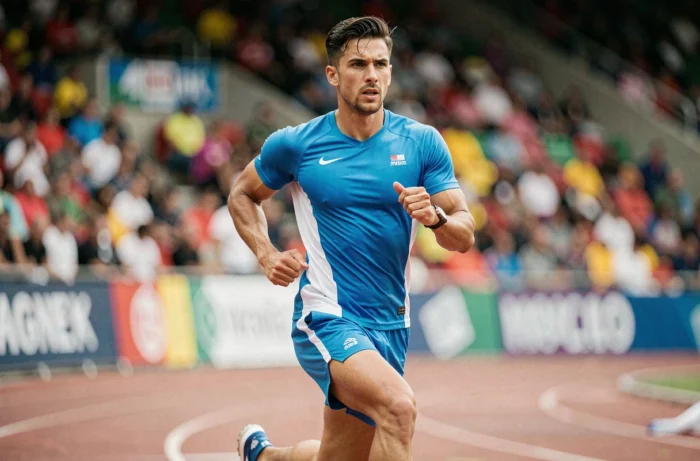
The year 2024 has reshuffled the cards of global sports well beyond the Olympic podiums. Between the rise of women’s sports as a standalone market, the explosion of digital audiences, and the emergence of new sporting territories, the landscape has shifted on foundational lines that simple competition calendars cannot adequately describe.
Women’s Sports in 2024: An Economic Reconfiguration, Not Just a Trend
The progression of women’s sports has crossed a structural threshold in 2024. According to Nielsen, this is no longer an emerging dynamic but a fundamental reconfiguration of media rights and arena economics. Major women’s leagues (WNBA, NWSL, LPGA) have recorded double-digit audience increases in recent times.
The advertising aspect confirms this shift: advertising spending on women’s sports has increased by 120% since 2022. Broadcasters and sponsors no longer treat these competitions as secondary slots but as media assets with measurable returns.
Fans who follow sports news daily, especially via the Blog Sport website, have noticed how much the coverage of women’s disciplines has expanded in recent months. However, a gap persists in actual visibility: on the general social media channels of major networks, the share of content dedicated to women’s sports falls back to around 8 to 9% of publications once specialized accounts are excluded.
The gap between advertising investment and mainstream editorial coverage remains an unresolved point of friction.

Indian Sports Market: A Growth Relay Off the European Radar
Sports in 2024 is not just about Paris or Germany. A joint report by Google and Deloitte values the Indian sports market at approximately $52 billion for the 2024 fiscal year, with an annual growth rate of around 14%. This trajectory suggests a near doubling by 2030.
The notable element: this growth is no longer solely reliant on cricket. Emerging sports, local sports properties, and live events are driving the market upward. Indian athletes themselves are becoming entrepreneurs and creators of new sports intellectual properties.
For European stakeholders in the sector, this dynamic raises a concrete question about the future distribution of broadcasting rights and commercial partnerships. The available data does not yet allow for measuring the direct impact on European leagues, but the capture of digital audiences by the Indian market is a signal that federations are closely monitoring.
Paris 2024 Olympics: What Attendance Figures Don’t Reveal
The Paris Games monopolized media attention over the summer, and the image benefits for France are well documented. The 32 disciplines, historic venues opened to competition, and the inclusion of sports like surfing and skateboarding have given the event a different tone from previous editions.
What deserves closer examination is the operational legacy. Anti-corruption protocols, enhanced doping controls, and commitments to sustainability have been presented as standards to replicate.
Field reports diverge on this point. While the institutional framework has progressed, the concrete application of these standards in other international competitions remains to be observed in the coming years.
Olympic Disciplines and Visibility of Para-Athletes
The Paris Paralympics benefited from significantly greater media coverage than previous editions. Prime-time programming on national channels and ticket sales open to the general public have helped bring para-sport audiences closer to Olympic standards. This evolution is part of a broader trend of recognition of para-sports as a legitimate sporting spectacle.

Social Media and Sports: The Battle of Short Formats
In 2024, the consumption of sports content on social media has intensified a shift that was already underway. Short formats (clips of less than 60 seconds, vertical summaries, mobile-optimized highlights) now capture a majority share of engagement on platforms.
This transformation has direct consequences for the sports rights economy. Leagues and federations are now negotiating specific rights for digital excerpts, separate from traditional television broadcasting rights. Several points merit monitoring:
- The monetization of highlights on social platforms, which remains lower than that of linear broadcasts despite comparable audience volumes
- The growing role of athletes as media entities in their own right, with personal accounts rivaling the reach of official league accounts
- The fragmentation of audiences across platforms (TikTok, Instagram Reels, YouTube Shorts), complicating impact measurement for advertisers
Direct monetization projects by athletes, through exclusive content or subscriptions, remain marginal in Europe. In the United States, some athletes have already structured genuine media businesses around their personal brand.
Regulation of Online Sports Betting: A Still Fragmented European Framework
The sports news of 2024 is not limited to the fields. The regulation of online sports betting is experiencing notable developments in Europe, without a harmonized framework yet emerging. Albania is preparing to reopen its online sports betting market, Hungary and Belgium are adjusting their systems, and Italy continues to strengthen its regulatory framework.
The absence of a common European directive on gambling allows each member state to define its own rules, creating significant disparities in player protection and the fight against sports fraud. Discussions at the European level focus on harmonizing compliance requirements, but field reports show that national approaches remain highly divergent.
For sports federations, the stakes are twofold: to protect the integrity of competitions and to capture a share of the revenues generated by betting operators. The link between betting regulation and the credibility of competitions is becoming a full-fledged sports governance issue.
The year 2024 will thus have marked sports in ways that rankings alone do not capture. The economic structuring of women’s sports, the rise of Asian markets, the battle of digital formats, and regulatory tensions around betting are shaping a profoundly changing sports landscape, the effects of which will be measured over the next decade.